

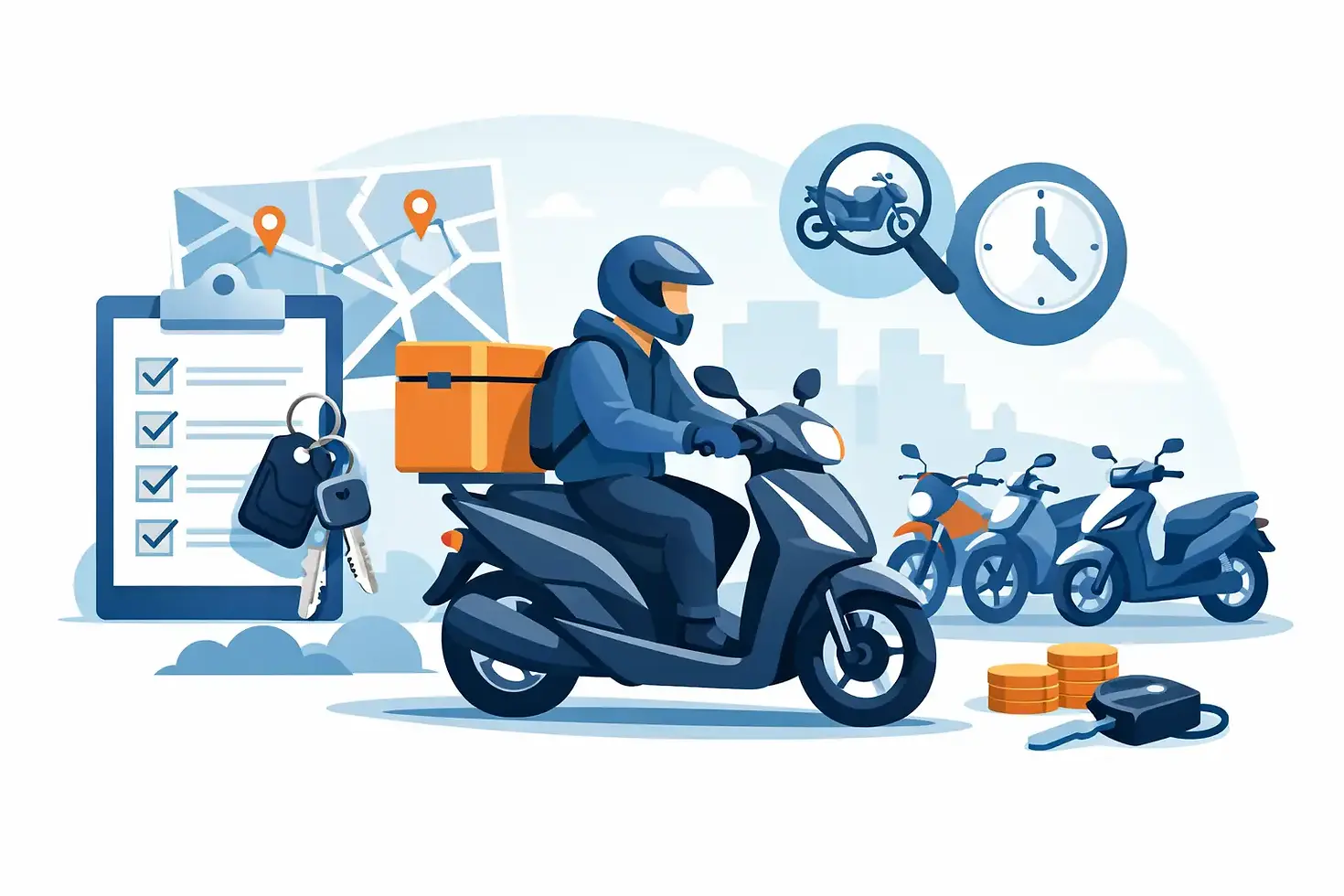
Motorcycle Rental for Delivery Riders

If your bike is down, your income slows down with it. That is why motorcycle rental for delivery riders is not just about transport. It is about staying on the road, keeping deliveries moving, and avoiding lost hours that turn into lost earnings.
For most riders, the real issue is not finding any bike. It is finding one fast, at a fair rate, without a deposit, without vague charges, and without wasting half a day on paperwork. When you work in food delivery, parcel delivery, or on-demand transport, speed matters before you even start the engine.
Why motorcycle rental for delivery riders makes sense
Buying a bike is not always the smart move. If you are just starting delivery work, managing cash flow, waiting on repairs, or testing whether gig riding fits your schedule, renting gives you flexibility. You get access to a working motorcycle without the upfront cost of ownership, insurance uncertainty, maintenance surprises, or long commitment.
That matters even more for riders who depend on daily earnings. A delivery rider does not need a complicated financing plan. A delivery rider needs a bike that starts, runs well in city traffic, and is available when work is available. The more direct the rental process, the better.
There is also the issue of timing. Demand can spike around weekends, holiday periods, or major sale events. If your own vehicle is unavailable at the wrong moment, every missed shift has a cost. Renting can be the practical backup that keeps your schedule intact.
What delivery riders should look for in a rental bike
The wrong rental setup can cost more than it saves. Low advertised rates mean very little if there are hidden fees, deposit requirements, or slow collection times. Riders should judge a rental by the full working picture, not just the headline number.
The first factor is pricing clarity. You should know what you are paying before collection. Daily rates, extension rates, and minimum rental periods should be stated clearly. If a provider is vague, expect trouble later.
The second factor is speed. A bike rental should not feel like applying for a mortgage. If you need to submit basic documents and can collect quickly, that is a real advantage. Fast pickup matters for riders who need to get back to work the same day.
The third factor is bike suitability. For urban delivery work, a motorcycle should be practical, fuel-efficient, and comfortable enough for repeated trips. It does not need to be flashy. It needs to be dependable in traffic, manageable for frequent stops, and realistic for long working hours.
The fourth factor is accessibility. Some riders are new license holders. Some are P-Plate riders. Some are foreigners with the correct driving documents. A provider that clearly states who can rent and what documents are needed removes friction from the start.
The real cost of a bad rental decision
A cheap rental can become expensive very quickly. If collection takes too long, you lose working time. If terms are unclear, you may end up paying more than expected. If the bike is unreliable, the problem is bigger than inconvenience. It can interrupt orders, delay routes, and damage your earning rhythm.
That is why experienced delivery riders usually care less about marketing and more about process. They want to know how fast the bike can be collected, what payment methods are accepted, whether there is a deposit, and whether the rental company has a track record. These are operational questions. They are the right questions.
A provider with clear terms and a reliable fleet is usually the better value, even if another option looks cheaper at first glance. Time on the road is what pays.
How to choose a motorcycle rental for delivery riders
Start with your work pattern. If you ride daily, your priority is consistency. You need a bike that can handle regular mileage and urban stop-and-go use. If you only need a replacement for a few days while your own motorcycle is being repaired, speed of access may matter more than model preference.
Then look at the rental terms closely. Check the daily rate, extension pricing, and minimum rental period. Make sure there are no surprise charges hidden in the process. Transparent rates save arguments later.
After that, consider the documents and collection flow. The best rental process is simple. You provide the required identification and license details, confirm availability, make payment, and collect the bike quickly. If the onboarding feels slow or confusing, that is a warning sign.
Finally, think about the provider's reliability. A company that has been operating for years and has handled high rental volume is usually better prepared for real-world rider needs. That experience shows up in how they communicate, how they maintain their fleet, and how quickly they can get you moving.
What kind of bike works best for delivery work
There is no single perfect model for every rider. It depends on route type, comfort preference, and experience level. But in general, delivery riders benefit from bikes that balance fuel economy, easy handling, and practical city performance.
Smaller displacement motorcycles are often a strong fit for dense urban areas because they are lighter, easier to maneuver, and generally cheaper to rent. For riders making frequent stops in traffic-heavy neighborhoods, that can make the working day less tiring.
At the same time, some riders prefer a bit more comfort or stronger road presence, especially if their routes include longer stretches or mixed road conditions. A model choice should match the work, not just the look. A stylish bike that is less practical for repeated delivery use may not be the smartest option.
This is where an experienced rental company helps. If the provider offers practical Class 2B options and explains what each bike is best suited for, riders can choose based on use, not guesswork.
Why no-deposit rental matters to gig workers
Cash flow is a real issue for many delivery riders. A large deposit can block money that should be used for fuel, meals, mobile data, or daily expenses. No-deposit rental removes one of the biggest barriers to getting started.
That does not just help new riders. It also helps experienced riders who need a temporary replacement bike and do not want extra cash tied up while they wait for repairs or manage other bills. For a working rider, capital should stay flexible.
A no-deposit model also signals confidence from the rental company. It shows that the process is built around convenience and volume, not around adding friction at the counter.
Fast collection is not a bonus. It is part of the service.
A 15-minute collection process can make the difference between working today and missing the best shift window. That is not a small detail. For delivery riders, downtime has a direct cost.
Fast collection works best when the terms are already clear. If rates are upfront, documents are straightforward, and payment options are flexible, the entire rental process becomes practical instead of stressful. That is the standard riders should expect.
This is also where trust matters. A provider like Stark Holding Inn Bike Leasing Pte Ltd is built around quick access, clear pricing, and no unnecessary delays. That approach fits delivery riders because it respects the fact that the bike is a tool for income, not a weekend extra.
When renting is better than owning
Owning a bike can make sense if you ride long term and want full control over your vehicle. But ownership comes with maintenance, depreciation, repair risk, and upfront costs. Renting makes more sense when flexibility is the priority.
If you are new to delivery work, renting lets you start without a heavy financial commitment. If you are between bikes, it gives you continuity. If your main vehicle is in the shop, it buys you time without forcing you off the road.
There is a trade-off, of course. Over a very long period, ownership may cost less than repeated short-term rental. But that only holds if the bike remains reliable and your cash flow can absorb the upfront burden. For many riders, that is not always the case.
What a good rental experience should feel like
It should feel simple. You check availability, confirm the rate, provide the required documents, make payment, and collect the bike. No guessing. No slow responses. No hidden charges appearing at the last minute.
That is what delivery riders actually need from a rental service. Not a sales pitch. Not unnecessary complexity. Just a clear, dependable route back onto the road.
If you earn through deliveries, your bike is part of your workflow. Treat the rental decision the same way you treat a shift - practical, fast, and focused on what keeps you moving. High demand can hit fast, so check availability early and book when the right bike is available.


Comments