

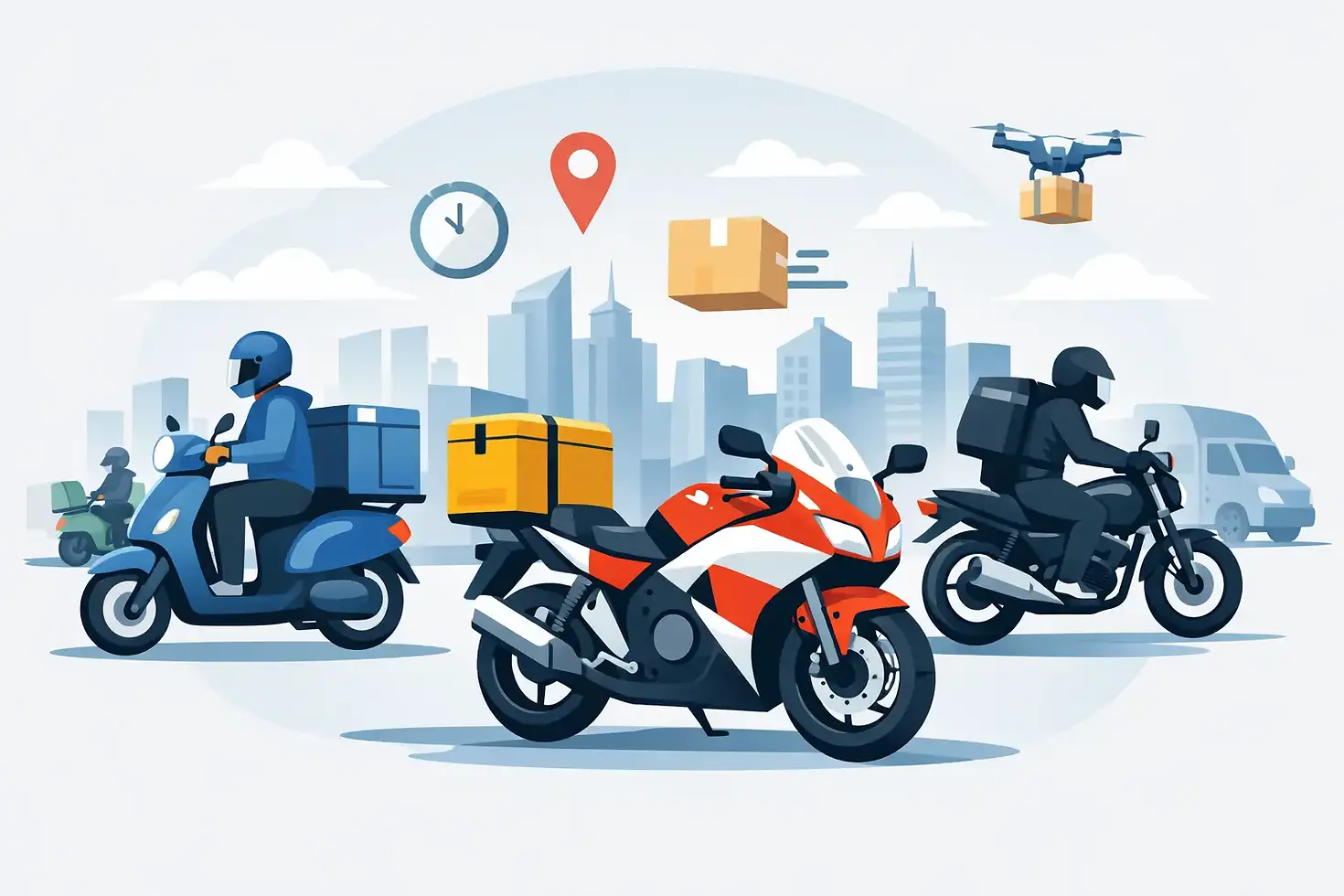
8 Best Motorcycles for Delivery Work

A delivery bike that looks good in photos but spends half the week at the workshop is a bad business decision. When your income depends on daily trips, traffic gaps, fuel costs, and long hours in the seat, the best motorcycles for delivery work are the ones that stay cheap to run, easy to handle, and reliable under pressure.
For most riders, the right choice is not the fastest bike or the most expensive one. It is the one that starts every morning, sips fuel, handles stop-and-go traffic well, and does not punish your back after a full shift. That matters even more if you are riding in a dense city, making frequent stops, and carrying food or parcels all day.
What actually makes a bike good for delivery work?
Start with the basics. A good delivery motorcycle needs strong fuel economy, predictable maintenance costs, and easy low-speed control. Delivery work means constant stopping, restarting, lane filtering where legal, U-turns, parking, and riding in bad weather. A bike that feels fine on a weekend ride can feel heavy, hot, or tiring after eight hours of work.
Seat comfort matters more than many new riders expect. So does riding position. A sporty posture may look sharp, but it can become a problem when you are on the road all day. Upright ergonomics usually win for delivery riders because they reduce wrist strain and give better visibility in traffic.
Storage setup also matters, even if the bike itself does not come with much built-in utility. A practical rear rack, stable frame, and compatibility with a delivery box make daily work easier. You should also think about tire availability, brake feel, and how easy it is to find parts when something needs replacing.
8 best motorcycles for delivery work
Honda ADV160
If you want one of the most practical all-around picks, the Honda ADV160 is hard to ignore. It gives you scooter convenience with a bit more road presence and comfort than many smaller options. The automatic transmission reduces fatigue in heavy traffic, which is a real advantage for riders doing long shifts with constant stops.
It also offers decent weather protection, under-seat storage, and a riding position that stays comfortable for longer hours. The trade-off is price. It usually costs more than simpler entry-level bikes, so it makes more sense for riders who expect to use it heavily and want comfort to support daily income.
Yamaha MX-King 150
The Yamaha MX-King 150 works well for riders who want a lightweight, responsive bike that still feels practical. It is quick off the line, slim enough for busy streets, and easier to manage than a larger motorcycle. That makes it a solid option for riders balancing delivery speed with fuel efficiency.
Because it is an underbone-style bike, it often feels more agile than bulkier machines in urban traffic. The main trade-off is storage and weather protection. It is not as convenient as a scooter, so riders relying on frequent box loads may need to think more carefully about setup.
Honda Click 125 or 150
For pure city delivery, a Click-style scooter makes a lot of sense. It is light, efficient, easy to ride, and simple for newer riders to manage. Automatic scooters stay popular in delivery work for a reason - less effort in traffic means less fatigue by the end of the day.
A smaller scooter may not feel as stable at higher speeds as a larger bike, but many riders do not need that. If your work is mostly short urban runs, frequent stops, and tight parking, this type of scooter can be one of the smartest money-saving choices.
Yamaha NMAX
The Yamaha NMAX is a strong step up if comfort is a priority. It is larger than small commuter scooters, which helps with seat comfort, road stability, and longer shifts. Riders who spend all day on the road often notice the difference quickly.
It also has a more premium feel and generally handles rougher road surfaces better than cheaper lightweight scooters. The downside is that it is bulkier in tight spaces and usually costs more to rent or own. If your routes include longer stretches and not just short downtown hops, that extra comfort can be worth paying for.
Honda Wave 125
The Honda Wave 125 has built its reputation on simplicity. It is economical, dependable, and easy to maintain. For riders focused on keeping operating costs low, this kind of underbone bike remains one of the safest picks.
It does not offer much in the way of features or comfort extras, but that is part of the appeal. Fewer complications can mean fewer problems. If your main priority is getting a proven workhorse instead of chasing style or speed, the Wave deserves serious consideration.
Yamaha Y15ZR
The Yamaha Y15ZR is popular because it feels sharper and more engaging than basic commuter bikes while still staying practical enough for daily use. It has enough power for riders who move between city roads and slightly faster routes, and it remains compact enough for urban work.
Still, there is a trade-off. A bike with a sportier edge can tempt riders to prioritize performance over comfort and cost. For delivery work, that only makes sense if your route profile actually benefits from the added power and you are comfortable with the riding position.
Honda PCX160
The Honda PCX160 sits in the comfort-first category. It is smooth, refined, and well suited to riders doing long hours in traffic. The seat, automatic transmission, and general ride quality make it appealing for full-time delivery use.
Its main advantage is rider comfort over time. Its main drawback is size and cost. If you need a machine that feels easy, relaxed, and stable every day, it is a strong option. If budget is your top concern, a simpler bike may produce a better return.
Yamaha R15 V4
The Yamaha R15 V4 is not the obvious delivery choice, and that is exactly why it needs context. It is stylish, sharp, and capable, but delivery work is about earning efficiency, not weekend-image value. A bike like this may suit riders who already prefer a sportbike feel and split time between work and personal riding.
For pure delivery use, the lower bars and sportier ergonomics can become tiring over long shifts. It is workable, but not ideal for everyone. If your priority is comfort, cargo practicality, and low-stress city riding, there are better tools for the job.
How to choose the best motorcycles for delivery work
The right bike depends on how you actually work. If your day is packed with short-distance food orders in heavy traffic, a light automatic scooter is usually the smart answer. It saves effort, parks easily, and keeps the day moving. If your routes involve longer travel and more mixed roads, a slightly larger scooter or commuter bike may give better comfort and stability.
Budget matters, but so does downtime. A cheaper bike is not a bargain if it creates repair delays or burns more fuel than expected. Look at the total working cost - fuel, maintenance, tires, comfort, and the chance of losing earnings when the bike is off the road.
Newer riders should also be honest about skill level. Delivery work already puts you under time pressure. A bike that is easy to control helps you stay safer and more productive. There is no prize for choosing a machine that makes daily work harder than it needs to be.
Rent or own?
For many delivery riders, renting makes more sense than buying, especially if you need to start working fast. Buying means higher upfront cost, registration, insurance planning, maintenance responsibility, and the risk of being stuck with the wrong bike. Renting gives you flexibility, lower entry cost, and a faster path to earning.
That is especially useful if you are testing delivery work, managing a temporary income gap, or waiting before committing to ownership. A practical rental setup with clear pricing, fast collection, and no deposit requirement can remove a lot of friction. That is why many riders look for providers that keep the process simple and operational, not complicated.
At Stark Holding Inn Bike Leasing Pte Ltd, that practical approach is the point. Riders who need a dependable bike for work often care less about showroom talk and more about fast pickup, transparent rates, and whether the bike is ready when they are.
The real answer is not one bike
There is no single winner for every rider. The best motorcycles for delivery work are the ones that match your route, budget, experience level, and daily hours. A Honda ADV160 may be the right call for comfort and convenience. A Yamaha MX-King 150 may suit a rider who wants a light, practical machine with quick city handling. A simple Wave or Click may still be the smartest money-maker for someone focused on low running costs.
Choose the bike that helps you work longer with less stress and fewer interruptions. That is the bike that earns its keep.


I find exploring visual ideas through observation easier to approach when there is a familiar situation to start from. A small choice of colour or viewpoint can change the feeling of an image. That thought gives me a starting point for exploring creative visual expression in connection with Distinctivefocus. That is the part I would keep thinking about after moving on to something else. How would you describe that change to someone who has not seen the work?
The idea of exploring visual ideas through observation gives me a reason to slow down and consider the details. A small choice of colour or viewpoint can change the feeling of an image. With Discoveratlantachineseart in mind, creative visual expression feels like a topic worth exploring one question at a time. I would rather explore one useful example carefully than pretend that the whole subject is already clear. How would you describe that change to someone who has not seen the work?
A place name such as Stobierna makes me curious about the stories people connect with it. Familiar routes, school memories, and changes in shared spaces can each offer a starting point for learning. That is what I associate with Stobierna local stories. I like questions that invite the ordinary details rather than only the most impressive event. Students can learn from comparing accounts and explaining what each one helps them understand about a place whose name they already know.
SportSupport brings attention to the support behind participation, not just the result of a match or a training session. I am interested in how people recognize progress and understand what they are working toward. That is the connection I make with SportSupport sports participation. Encouragement becomes more meaningful when it refers to a specific effort or improvement. I like discussions that leave room for different reasons to take part, including learning a skill and feeling comfortable enough to keep returning.
PSTD is an abbreviation whose meaning I would not want to invent from the letters alone. I would first look for enough context to understand the educational subject and who it concerns. That is how I approach PSTD educational information. A short explanation can make a compact name easier to use, especially for someone arriving without background knowledge. I like information that gives the reader a clear starting point and a reason to ask a more focused question.